
Osmania Biscuit Recipe: Soft, Buttery and Eggless
To make Osmania biscuits, cream 120 g butter with 80 g powdered sugar, mix in 200 g flour with milk powder, custard powder, cardamom, salt and baking powder, chill the dough, roll it about 6 mm thick, cut rounds, brush the tops with saffron milk, and bake at 180°C for 16 to 20 minutes until the edges turn light golden.
- Prep25 min
- Chill15–30 min
- Bake16–20 min
- Makesabout 25–30 biscuits
- DietEgg-free, vegetarian
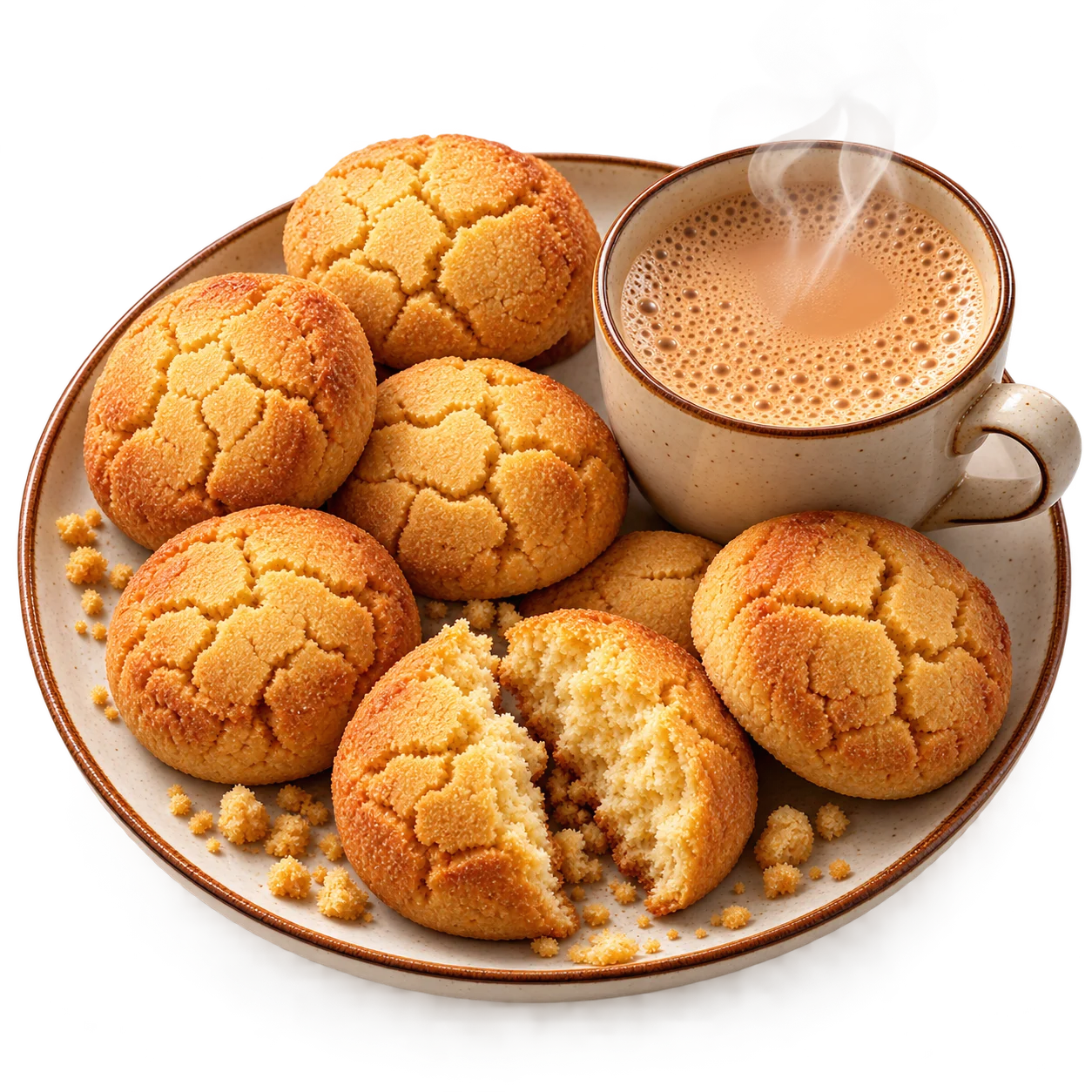
What you need
Weigh the ingredients if you can. Cup measures vary, and butter and flour are easy to over- or under-measure. Learn what each one does in our ingredients guide.
For the dough
- Plain flour (maida)200 g, about 1½ cups
- Unsalted butter, softened120 g, about ½ cup
- Powdered (icing) sugar80 g, about ⅔ cup
- Milk powder10 g, about 1 tbsp
- Custard powder (egg-free)10 g, about 1 tbsp
- Baking powder½ tsp
- Salt¼ tsp
- Cardamom powder½ tsp
- Milk, for the dough1 tbsp (15 ml)
For the saffron milk
- Warm milk3 tbsp (45 ml)
- Saffron strands8–10 strands
Equipment
Mixing bowls, a sieve, a rolling pin, a 5 cm round cutter, a baking tray lined with parchment, and an oven.
Check that your custard powder is egg-free. Most sold in India are, but read the pack. Need amounts for a different batch size? Use our amounts calculator.
How to make Osmania biscuits
- Steep the saffron
Warm 45 ml of milk until it is hot to the touch but not boiling. Add the saffron and set it aside for at least 10 minutes while you work.
- Sift the dry ingredients
Sift the flour, milk powder, custard powder, baking powder, salt and cardamom together into a bowl.
- Cream the butter and sugar
Beat the softened butter and powdered sugar until pale and fluffy. This takes about 4 to 5 minutes with a mixer, or 8 to 10 minutes by hand. Beat in 1 tbsp of milk.
- Bring the dough together
Add the dry mix in two or three batches and fold gently until just combined. If it looks crumbly, add milk a few drops at a time. Do not knead, or the biscuits turn tough.
- Chill
Shape the dough into a flat disc, wrap it and chill for 15 to 30 minutes. This helps the biscuits keep their shape.
- Heat the oven
Preheat to 180°C (about 160°C if you use a fan setting) with the rack in the middle.
- Roll and cut
Roll the dough on a lightly floured surface to about 6 mm (¼ inch). Cut 5 cm rounds and re-roll the scraps once.
- Arrange the biscuits
Place them 2 to 3 cm apart on the lined tray.
- Add the saffron milk and bake
Brush or spoon the saffron milk over the tops. Tilt the tray to pour off any extra. Bake for 16 to 20 minutes, turning the tray halfway, until the edges are light golden.
- Cool and store
Leave the biscuits on the tray for 10 minutes, as they firm up while cooling. Move them to a rack, and once cold, keep them in an airtight container.
Choose your texture
Published recipes bake between 150°C and 180°C. Ovens differ, so bake one test biscuit first.
| Oven setting | Time | Result |
|---|---|---|
| 180°C | 16–18 min | Pale with light golden edges. Very soft and tender. |
| 180°C | 22–25 min | Browner and firmer, with a little bite. Holds up better when dunked. |
| 150°C | 22–25 min | Gentle, even colour and a slightly crisper finish. |
Why the saffron milk? It soaks into the surface, adds colour and scent, and keeps the top soft.
If something goes wrong
Biscuits spread
The butter was too warm or the dough was not chilled. Chill the cut rounds for 10 minutes before baking.
Biscuits are hard
The dough was overworked or baked too long. Mix just until combined and take them out when the edges are light golden.
Dough is crumbly
Add milk a few drops at a time and press, rather than knead, until it holds together.
Too pale
Bake a few minutes longer, or lift the tray slightly in the oven. A second light brush of saffron milk adds colour.
Tastes flat
Check the salt and cardamom. Both are small amounts, but they give the sweet-and-salty character.
Want it richer
Swap part of the butter for ghee. Use about 80% as much ghee as butter, because butter contains water.
Recipe questions, answered
Is this Osmania biscuit recipe eggless?
Yes. It contains no egg. Check that your custard powder is egg-free, since most are.
What oven temperature is best for Osmania biscuits?
Most published recipes use 180°C for 16 to 25 minutes. Some bake at 150°C for 22 to 25 minutes. Shorter bakes give softer biscuits and longer bakes give firmer ones.
Why is saffron milk brushed on top?
It adds a golden colour and a gentle aroma, and it keeps the surface soft.
Can I make Osmania biscuits without custard powder?
Yes. Replace it with the same weight of cornflour and add a drop of vanilla. The biscuit will be slightly less tender.
Can I use ghee instead of butter?
Yes, use about 80% as much ghee as butter. All-ghee dough is more crumbly, so a mix of the two is easier to handle.
How long should I chill the dough?
15 to 30 minutes is enough. A longer chill is fine, but let the dough soften slightly before rolling.
Can I use whole wheat flour?
It is not recommended. Whole wheat makes the biscuits denser and darker, and less crumbly.
More on Osmania biscuit
How we wrote this. We compared several published recipes and found where they agree on amounts, oven settings and method. This is a consensus starting point, so bake one test biscuit and adjust to your oven. If you spot a mistake, please tell us.